
Elevate Dinner with Flavorful Korean Black Bean Noodles
Last Updated on March 13, 2026 by Alma
There s something truly comforting about a steaming bowl of Korean Black Bean Noodles, or Jajangmyeon, that instantly transports me to my favorite neighborhood eatery. The rich aroma of the savory black bean sauce mingling with saut ed pork belly and fresh vegetables fills my kitchen, turning an ordinary weeknight into a delightful culinary adventure. Every bite is a satisfying marriage of textures and flavors, making it a crowd-pleaser for my family and friends.
After a long day filled with the chaos of life, this recipe is my go-to solution for whipping up a home-cooked meal that feels indulgent yet surprisingly simple. The best part? It all comes together in just 30 minutes, allowing you to savor that restaurant-quality experience from the comfort of your own dining table.
So, let s dive into this quick and delicious recipe that redefines comfort food while showcasing the unique flavors of Korean cuisine! Whether you re a seasoned home cook or someone looking to break free from the fast-food rut, this dish is sure to become a favorite.
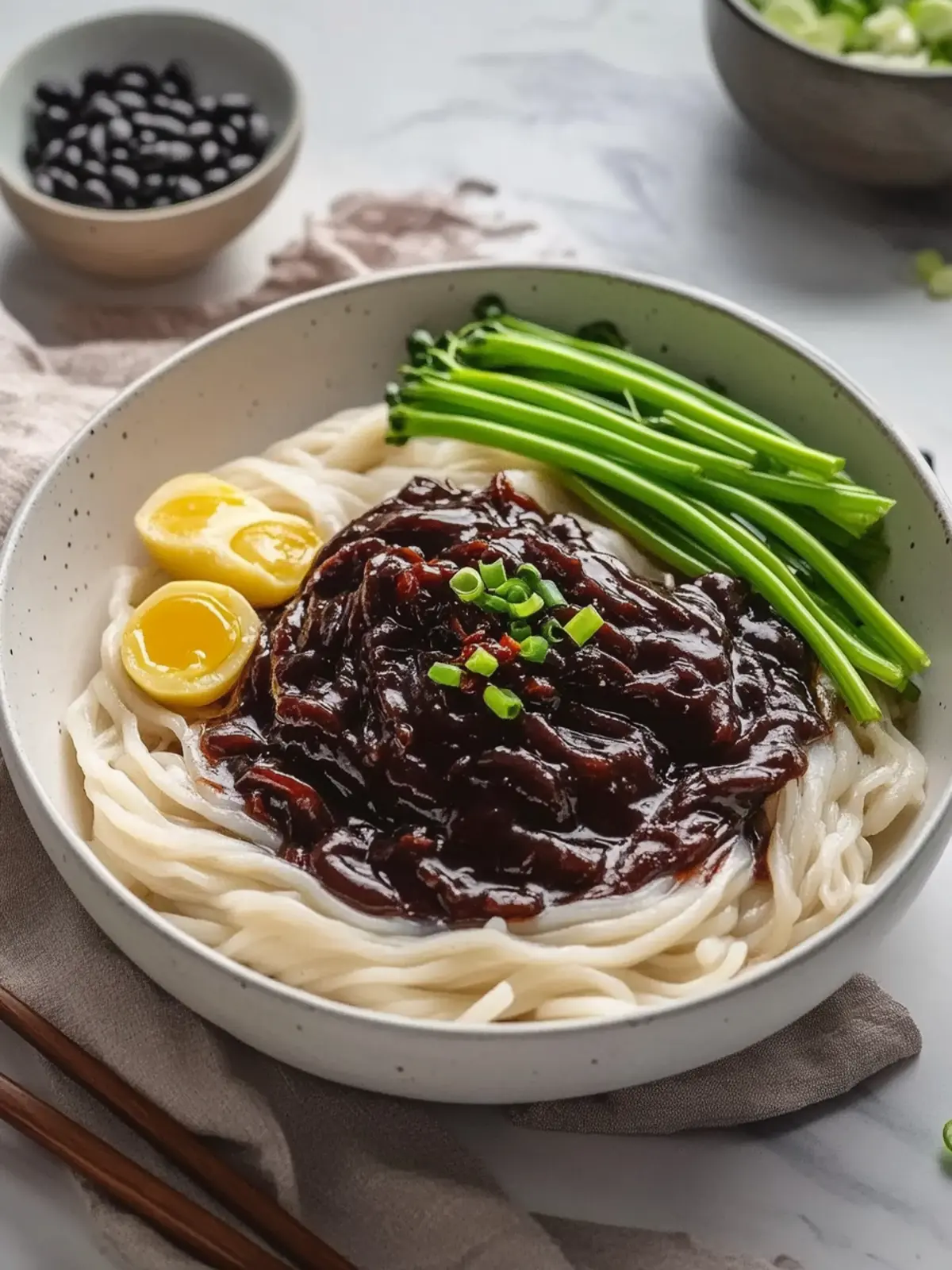
Why is Korean Black Bean Noodles so special?
Comforting Warmth: Korean Black Bean Noodles deliver a heartwarming experience, perfect for chilly evenings or when you need a pick-me-up.
Deliciously Balanced: The rich black bean sauce, tender pork belly, and vibrant vegetables create a satisfying harmony of flavors in every mouthful.
Quick to Prepare: Ready in just 30 minutes, this dish is an effortless way to wow your family without spending all evening in the kitchen.
Versatile Ingredients: Feel free to customize the vegetables based on what you have on hand, making it a great way to reduce waste.
Family-Friendly: Not only is this dish full of flavor, but it also appeals to both kids and adults, ensuring a happy dinner table.
Make this meal tonight and experience a delicious alternative to fast food that the whole family will love!
Korean Black Bean Noodles Ingredients
Get ready for an umami-packed delight with these essentials!
For the Noodles
Jajangmyeon wheat noodles Fresh noodles give the best texture, but you can substitute with any other noodles if needed.
For the Marinade
Pork belly Adds richness; can be swapped for chicken or tofu for a lighter option.
Ginger Freshly grated enhances flavor; dried ginger can substitute in a pinch.
Mirin A sweet rice wine; substitute with a touch of sugar mixed in vinegar if unavailable.
Black pepper Just a hint for warmth; you can use white pepper for a different taste.
Soy sauce Essential for depth; tamari is a great gluten-free alternative.
For the Sauce
Vegetable oil Great for cooking; can be swapped with sesame oil for added flavor.
Korean roasted black bean paste (Chunjang) The star of the dish; a key ingredient for authentic Korean Black Bean Noodles.
Brown sugar Balances the savory flavors; you can use coconut sugar for a healthier choice.
Chicken stock For richness; vegetable broth is a perfect substitute for a vegetarian version.
Oyster sauce Adds umami; replace with a vegetarian version if desired.
MSG (optional) Amplifies flavors; can be omitted if you have dietary concerns.
For Thickening and Vegetables
Cornstarch Used to thicken the sauce; arrowroot powder works if you prefer.
Water Just for mixing with the cornstarch; no substitutes necessary.
Yellow onion Provides sweetness when saut ed; red onions can be used for a sharper taste.
Green onion Freshness for garnish; chives are a good alternative.
Potato Adds heartiness; swap for sweet potatoes for a tasty twist.
Zucchini Versatile and absorbs flavors well; bell peppers are a colorful alternative.
Green cabbage Brings crunch; Napa cabbage can substitute nicely.
For Garnish
Cucumber Fresh julienned cucumbers add crunch and brightness; carrots work too!
Toasted sesame seeds Enhance flavor and give a nutty touch; try chopped peanuts for a different texture.
Pickled yellow radish (Danmuji) Adds a tangy contrast; you can skip it if preferred.
Now you have everything you need for a delicious bowl of Korean Black Bean Noodles that showcases both comfort and flavor!
How to Make Korean Black Bean Noodles
Marinate the Pork: In a medium-sized bowl, combine diced pork belly, grated ginger, mirin, black pepper, and soy sauce. Mix well and set aside to marinate for enhanced flavor.
Toast the Sauce: In a large skillet over low heat, add vegetable oil and toast the black bean paste along with brown sugar for about 3-4 minutes. Pour it into a small bowl and set aside.
Cook the Pork: Using the same skillet, increase the heat to medium, add 1 tablespoon of oil, and cook the marinated pork until lightly browned. Once done, transfer it to a plate.
Saut the Vegetables: In the skillet, add another tablespoon of oil and saut diced onions and green onions until fragrant and translucent. Stir in the diced potato and zucchini, cooking until they soften, then add cabbage until it wilts.
Combine Ingredients: Add the toasted black bean paste and cooked pork back into the skillet. Pour in chicken stock, oyster sauce, and optional MSG, stirring until the sauce is smooth and beginning to simmer for about 2-3 minutes.
Thicken the Sauce: In a small bowl, mix cornstarch with water until combined. Pour this mixture into the simmering sauce, stirring until it thickens to your desired consistency.
Cook the Noodles: Bring a large pot of water to a boil, then cook the jajangmyeon noodles for 3-4 minutes or until al dente. Drain the noodles and set aside.
Serve: Dish out the noodles in individual bowls, generously pouring the thick black bean sauce over them. Garnish with julienned cucumbers, toasted sesame seeds, and a side of pickled radish (danmuji).
Optional: For an extra crunch, add some chopped peanuts as a garnish!
Exact quantities are listed in the recipe card below.
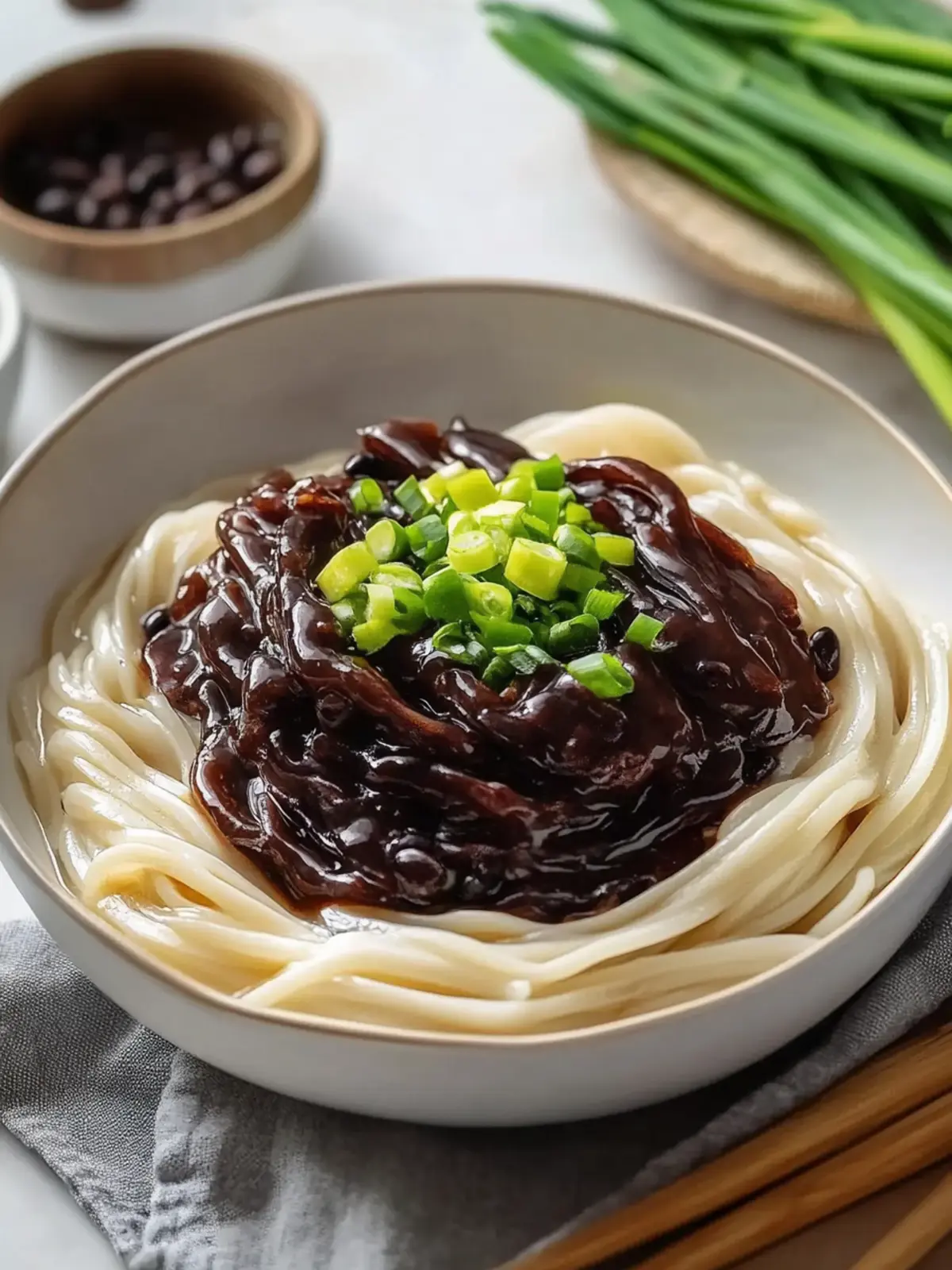
How to Store and Freeze Korean Black Bean Noodles
Fridge: Store leftover Korean Black Bean Noodles in an airtight container for up to 3 days to maintain freshness and flavor.
Freezer: Portion the noodles and sauce separately in freezer-safe containers; they can last up to 2 months. Just thaw and reheat when you’re ready to enjoy!
Reheating: For best results, reheat in a skillet over low heat, adding a splash of chicken stock or water to revive the sauce’s consistency.
Room Temperature: It’s best to avoid keeping cooked noodles at room temperature for more than 2 hours to prevent any food safety concerns.
Expert Tips for Korean Black Bean Noodles
Choosing Noodles: Fresh jajangmyeon noodles provide the best texture; avoid overcooking by following package instructions closely.
Balancing Flavors: Taste your sauce before serving; adjust soy sauce or sugar for a personalized flavor that suits your palate.
Marinating Importance: Don t skip marinating the pork this step infuses the meat with flavor and enhances your Korean Black Bean Noodles.
Vegetable Cook Time: Ensure vegetables are just tender but not mushy; this keeps the dish vibrant and preserves their natural crunch.
Thickening Tip: If the sauce is too thick, stir in a bit more chicken stock or water until it reaches your desired consistency.
Korean Black Bean Noodles Variations
Feel free to explore your creativity with this recipe, as there are endless ways to customize your dish!
- Meat-Free: Substitute pork with diced tofu or tempeh for a delicious vegetarian twist. You won’t lose any flavor, just gain some plant-based goodness!
- Spicy Kick: Add gochujang or sliced fresh chili peppers to the sauce for a fiery addition. A little heat can elevate the flavors and awaken the palate.
- Zesty Citrus: Squeeze some fresh lime juice over the finished dish for a refreshing zing that balances the richness of the black bean sauce. This simple touch can brighten up every bite.
- Noodle Alternatives: If jajangmyeon noodles aren t available, try using udon or rice noodles for a delightful variation in texture. They each offer their own take on this dish s comforting vibe.
- Veggie Feast: Incorporate assorted vegetables like bell peppers, bok choy, or mushrooms to the mix for more color and nutrients. This is a wonderful way to use up those veggies lingering in your fridge!
- Nutty Flavor: Sprinkle in some crushed peanuts or cashews for a crunchy garnish that adds a new layer of texture. It s an easy way to add richness and complexity to your meal!
- Vegan Option: Use vegan oyster sauce and replace chicken stock with vegetable broth for a completely plant-based dish that everyone can enjoy. Flavor doesn’t have to be sacrificed here!
- Sweet and Savory: For a touch of sweetness, try mixing in some diced pineapple in the saut ed veggies. It adds a tropical flair that makes this dish even more exciting!
Let your imagination run wild and make this recipe uniquely yours with these variations!
What to Serve with Korean Black Bean Noodles?
Nothing completes a bowl of comforting noodles like the perfect accompaniments to elevate your meal experience!
- Steamed Bok Choy: A tender, slightly crispy side that brings a fresh element, enhancing the richness of the black bean sauce.
- Crispy Fried Tofu: The crunchy exterior contrasts beautifully with the chewy noodles, adding a delightful texture to your plate.
- Spicy Kimchi: Its tangy and fiery profile offers a beautiful balance to the savory flavors, creating a satisfying contrast.
- Korean Pancakes (Pajeon): Savory pancakes filled with scallions add a hearty bite, making for a perfect shared appetizer.
- Cucumber Salad: A refreshing, light salad with a tangy dressing brightens your meal while complementing the rich noodles wonderfully.
- Mango Sticky Rice: This sweet dessert brings a delightful end to your meal, balancing the savory with creamy and sweet flavors.
- Soda or Sparkling Water: A fizzy drink cuts through the richness of the dish, making each bite more refreshing and enjoyable.
- Sichuan Peppercorn Chicken Wings: Their bold, spiced flavor adds an exciting twist to the meal, ensuring a delightful fusion of tastes on your table.
- Korean Cold Noodles (Naengmyeon): A chilled dish, perfect as a side, brings a lightness and fun culinary variation to your dining experience.
Make Ahead Options
These Korean Black Bean Noodles are fantastic for meal prep! You can marinate the pork belly up to 24 hours in advance to enhance the flavors. Additionally, chop the vegetables (onion, zucchini, potato, and cabbage) and store them in airtight containers in the refrigerator for up to 3 days. When you’re ready to serve, simply cook the noodles and prepare the sauce following the recipe instructions. To maintain the dish’s quality, store the sauce separately and mix it only when serving; this keeps the noodles from becoming too soft. You’ll enjoy a homemade, restaurant-quality meal with minimal last-minute effort!
Korean Black Bean Noodles Recipe FAQs
How do I choose the right noodles for Korean Black Bean Noodles?
Absolutely! For the best texture, I recommend using fresh jajangmyeon wheat noodles if you can find them. They provide the perfect bite and hold up well against the rich black bean sauce. If fresh is unavailable, you can substitute with any similar noodles, like udon or even spaghetti. Just be mindful of the cooking times to avoid overcooking!
How should I store leftover Korean Black Bean Noodles?
To keep your leftover Korean Black Bean Noodles fresh and delicious, store them in an airtight container in the fridge. They ll stay good for about 3 days. Make sure to cool them completely before sealing to prevent condensation. This way, you can enjoy your delicious meal again soon!
Can I freeze Korean Black Bean Noodles?
Certainly! To freeze your Korean Black Bean Noodles, separate the noodles and sauce into freezer-safe containers. Label them with the date and freeze for up to 2 months. When you re ready to enjoy, just thaw them overnight in the refrigerator and reheat in a skillet over low heat, adding a splash of chicken stock or water if needed for smoothness.
What if my black bean sauce is too thick?
Very common! If you find your sauce is a bit too thick, don t worry. Simply add a small amount of chicken stock or water while stirring over low heat until it reaches your desired consistency. It s better to start with just a little and add more as needed, ensuring your sauce remains flavorful and smooth.
Are there any dietary considerations for Korean Black Bean Noodles?
Definitely! If you’re preparing this dish for someone with dietary restrictions, you can easily adapt it. Substitute the pork belly with chicken or tofu for a lighter option, and use vegetable broth and a vegetarian oyster sauce alternative to make it vegetarian-friendly. If concerned about MSG, you can exclude it without affecting the overall flavor significantly more the merrier!
How long can I keep cooked noodles at room temperature?
It s best to avoid leaving cooked noodles at room temperature for more than 2 hours. This helps prevent any food safety concerns, as bacteria can grow quickly in cooked foods when left out. Always aim to refrigerate leftovers promptly!