
Mouthwatering Tteokbokki Recipe: Your New Favorite Comfort Food
Last Updated on March 13, 2026 by Alma
When I first tasted tteokbokki at a bustling street market in Seoul, the experience was nothing short of transformative. The intoxicating aroma of spicy gochujang mingled with the sizzling sound of rice cakes cooking in a vibrant red sauce created a sensory symphony that felt both exciting and comforting. This beloved Korean dish isn t just food; it’s a celebration of flavor, intertwining sweet, spicy, and umami notes that dance on your palate.
Perfect for a cozy night in or when entertaining friends, tteokbokki is incredibly easy to whip up in just 35 minutes, making it an ideal antidote to the same old takeout routine. Picture this: tender, chewy rice cakes enveloped in a glossy sauce so delicious that you’ll find it hard to stop at just one serving. Whether served as a snack or a hearty main dish, tteokbokki is bound to impress with its unique flavor and delightful texture while bringing a taste of Korea right to your kitchen. Let’s dive into this irresistible recipe and bring the magic home!
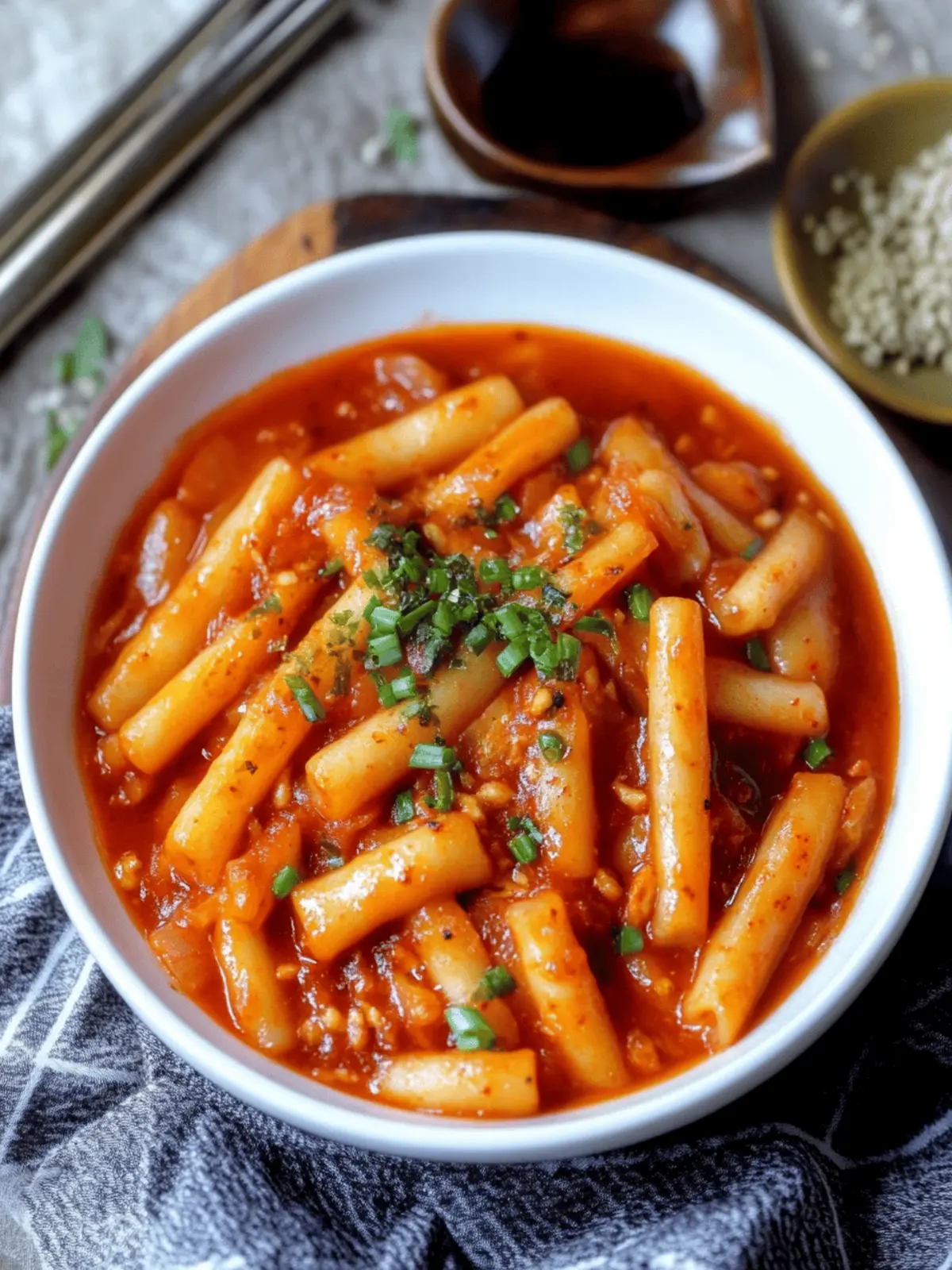
Why is Tteokbokki a Must-Try Dish?
Unforgettable, this Korean street food delivers a flavor explosion with every bite, combining sweet and spicy notes that will captivate your taste buds. Quick and easy, you can have this delicious meal ready in just 35 minutes, perfect for busy weeknights or sudden cravings. Versatile, tteokbokki can be tailored to your preferences, with options for vegetarian substitutions or added veggies. Crowd-pleaser, it s an excellent choice for entertaining, guaranteed to impress your guests with its beautiful presentation and delightful aroma. Comforting, each chewy bite offers the warmth of home-cooked goodness, making it a go-to dish for any occasion.
Tteokbokki Ingredients
For the Sauce
Anchovy Stock or Water A classic base for the sauce that adds umami flavor; you can substitute with water for a vegetarian version.
Gochujang (Korean Red Chili Paste) Provides that signature heat and depth of flavor; crucial for authentic tteokbokki taste.
Gochugaru (Korean Chili Pepper Flakes) Adds spiciness and a vibrant color; cayenne pepper can work in a pinch, but the flavor will differ.
Soy Sauce Enhances the umami and saltiness; opt for gluten-free soy sauce for a gluten-free option.
Sugar Balances the heat with sweetness, helping to create a well-rounded sauce; brown sugar or honey can be interesting alternatives.For the Rice Cakes
Tteokbokki Rice Cakes Essential for that delightful chewy texture; frozen varieties are available at Asian grocery stores.
Korean Fish Cakes Offers protein and extra texture; you can swap in fried tofu pockets for a vegetarian version.For the Broth
Dried Kelp Infuses flavors into the broth; it’s optional, but helps enhance the overall taste.For Finishing Touches
Toasted Sesame Oil Adds rich, nutty undertones; don’t skip this ingredient for the best authenticity.
Scallions Provide a fresh crunch and slight onion flavor; chives or green onions make perfect substitutes.
Sesame Seeds Adds a nice crunch for garnish; feel free to omit if you don t have any on hand.
How to Make Tteokbokki
Prepare the broth.
Start by boiling anchovy stock and dried kelp in a medium pot over medium heat. Once the water begins to boil, remove the kelp, reduce heat, and let it simmer for 10 minutes to develop rich flavor.Season the broth.
Stir in gochujang, gochugaru, soy sauce, and sugar. Mix well and bring it back to a gentle boil, allowing the flavors to meld together beautifully.Cook the rice cakes.
Add the tteokbokki rice cakes to the simmering sauce. Allow them to cook for about 8-10 minutes, stirring frequently until they become soft and chewy, soaking up all that delicious sauce.Add the fish cakes.
Introduce sliced Korean fish cakes (or tofu pockets) into the pot and cook for an additional 4 minutes, ensuring everything is thoroughly mixed and heated through.Finish with sesame oil.
Turn off the heat and drizzle in toasted sesame oil. Gently fold in the chopped scallions, allowing their fresh flavor to lift the finished dish. Garnish with sesame seeds before serving.
Optional: Pair with Korean banchan for an even more authentic experience.
Exact quantities are listed in the recipe card below.
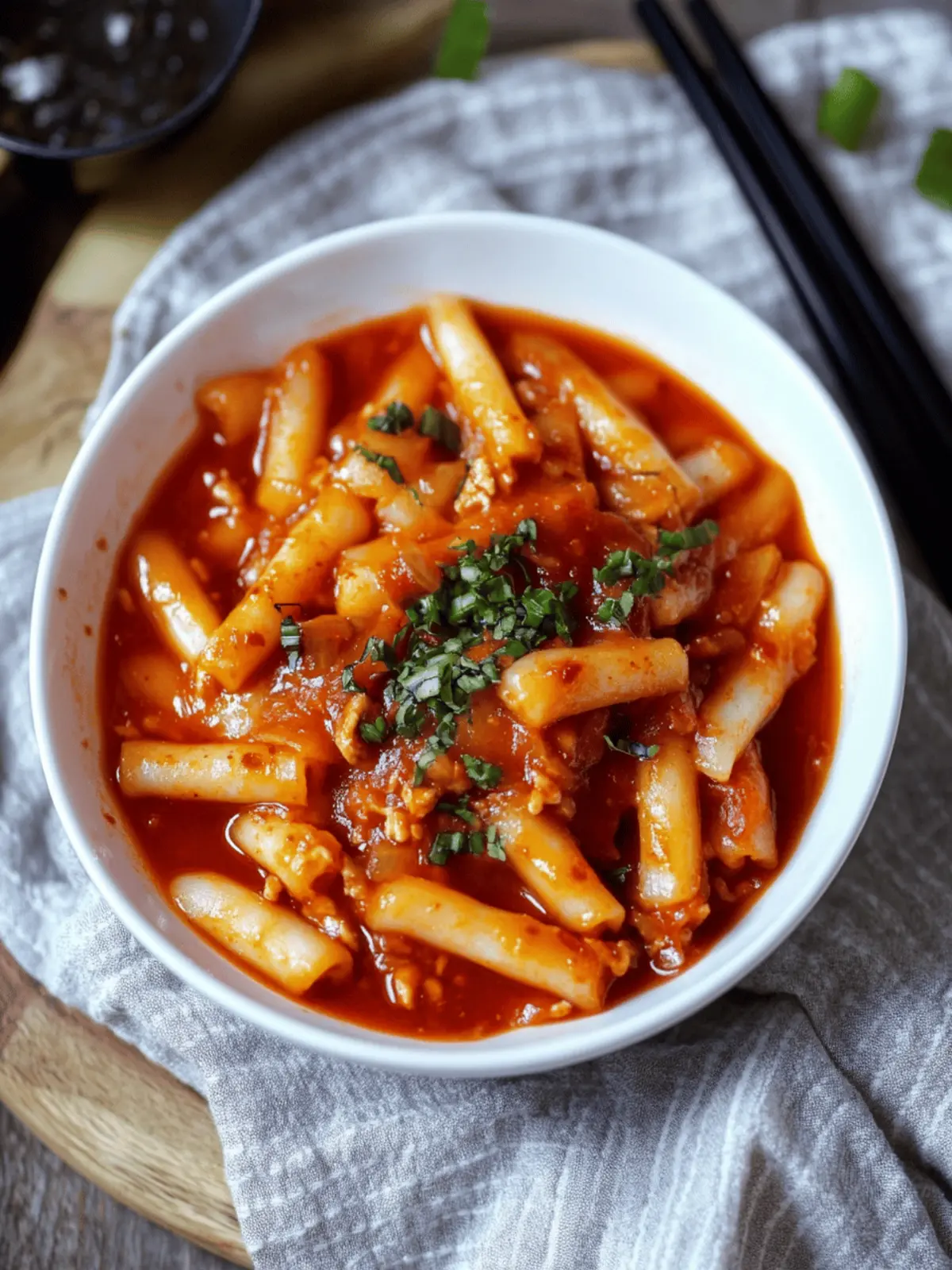
What to Serve with Tteokbokki?
The perfect dining experience awaits when you pair your spicy tteokbokki with delightful complements designed to enhance every bite.
Korean Fried Chicken:
Crispy and flavorful, this chicken adds an irresistible crunch that offsets the chewy rice cakes beautifully. A classic pairing often enjoyed together in Korean cuisine.Steamed Bok Choy:
Light and fresh, steamed bok choy brings a lovely green contrast to the bold flavors of tteokbokki. Its subtle crunch and sweetness balance the spice well.Kimchi:
Fermented and tangy, kimchi introduces a layer of heat and acidity, enhancing the overall flavor profile. A small side will add depth to your meal.Rice:
Simple steamed white rice acts as a neutral base, soaking up the rich gochujang sauce while easing the spice for those who prefer milder dishes.Spicy Cucumber Salad:
Crisp and refreshing, this salad brings a cooling effect that contrasts the heat of tteokbokki. The crunch adds texture and a vibrant color to your plate.Mandu (Korean Dumplings):
These delectable bites are perfect for dipping and enhance the meal’s overall comfort factor. Their savory filling complements the sweetness of the tteokbokki sauce wonderfully.Soda or Sweet Tea:
A cold drink helps to balance the spiciness, making a sweet tea or a fizzy soda a great choice for refreshing your palate between bites.Chocolate Brownie:
For dessert, a rich chocolate brownie offers a delightful sweetness that contrasts the spiciness of tteokbokki. It’s a simple yet satisfying way to end your meal.
Expert Tips for Tteokbokki
- Freshness Matters: Ensure your tteokbokki rice cakes are fresh for the best chewy texture; frozen versions may need extra soaking time for optimal results.
- Monitor the Heat: Avoid letting the sauce boil too aggressively as it can burn; maintain a gentle simmer for consistent flavor.
- Don’t Skip the Oil: Drizzling toasted sesame oil at the end enhances the authentic flavor of tteokbokki; skipping it can diminish the dish’s richness.
- Mix and Stir: Stir frequently while cooking to prevent the rice cakes from sticking to the bottom of the pot this ensures even cooking and prevents burning.
- Customizable Recipes: Feel free to add your favorite vegetables, like cabbage or carrots, to your tteokbokki for added nutrition and a pop of color.
Tteokbokki Variations & Substitutions
Feel free to mix things up and customize your tteokbokki experience with these creative variations!
Vegetarian Version: Replace anchovy stock with vegetable broth and swap fish cakes for fried tofu pockets for a delicious meatless dish.
Spicy Kick: Add more gochugaru or a few slices of fresh jalape os to intensify the heat for those that crave an extra fiery flavor.
Extra Veggies: Stir in colorful vegetables like shredded cabbage, carrot matchsticks, or bell peppers as the rice cakes cook for a nutritious twist.
Sweet & Savory: Drizzle a bit of honey or maple syrup into the sauce for a touch of sweetness that beautifully complements the heat of the gochujang.
Creamy Addition: For a luxurious twist, add a splash of heavy cream or coconut milk towards the end, creating a rich, creamy sauce.
Cheesy Version: Toss in some shredded mozzarella or gochujang-infused cheese towards the end to create a gooey, cheesy delight that melts into the dish.
Seafood Lovers: Incorporate shrimp or scallops along with the fish cakes, allowing the seafood to cook through and add an oceanic flavor to each bite.
Nutty Crust: Sprinkle crushed peanuts or cashews as a finishing touch for added crunch and a nutty flavor explosion on top of each serving.
Let your creativity shine and enjoy the endless possibilities of flavors in every bowl of tteokbokki!
Storage Tips for Tteokbokki
Fridge: Store leftover tteokbokki in an airtight container for up to 2-3 days. Keep in mind it may harden as it cools, so reheating is essential.
Freezer: For longer storage, tteokbokki can be frozen for up to 1 month. Portion it out in freezer-safe bags or containers, ensuring as much air as possible is removed.
Reheating: When ready to enjoy, reheat in a pan over medium heat with a splash of water to revive the sauce and soften the rice cakes for the best texture.
Freshness Tip: Always aim to enjoy tteokbokki fresh after cooking for the ultimate experience, but storing ensures you can savor this delicious dish even later!
Make Ahead Options
These delectable tteokbokki are perfect for meal prep enthusiasts! You can prepare the anchovy stock (or water) and season it with gochujang, gochugaru, soy sauce, and sugar up to 24 hours in advance. Simply refrigerate the mixture in an airtight container. On the day of serving, reheat the sauce over medium heat, add the tteokbokki rice cakes, and let them simmer for about 8-10 minutes until tender. Remember to stir frequently to prevent sticking. This method not only saves you time but also ensures your tteokbokki remain just as delicious and satisfyingly chewy, bringing the vibrant taste of Korean street food right to your table!
Tteokbokki Recipe FAQs
What should I look for when selecting tteokbokki rice cakes?
Absolutely! When selecting tteokbokki rice cakes, look for packages that are fresh and have a slightly glossy appearance. If using frozen, ensure they don’t have dark spots or freezer burn. If you’re unsure, feel free to soak them in warm water for 10-15 minutes before cooking to soften them.
How can I store leftover tteokbokki?
Very! Store any leftover tteokbokki in an airtight container in the refrigerator for up to 2-3 days. Keep in mind that it may harden when cooled, so it’s best to reheat gently with a splash of water to regain that delightful chewy texture.
Can I freeze tteokbokki for later use?
Yes, you can freeze tteokbokki! Portion it out in freezer-safe bags or containers, ensuring as much air as possible is removed. It will keep well for up to 1 month. When you’re ready to enjoy, simply reheat in a pan over medium heat with a splash of water, stirring occasionally until heated through.
What should I do if my tteokbokki sauce is too thick?
If you find your sauce thickens too much during cooking, you can add a little water or additional stock gradually while stirring until it reaches your desired consistency. You want that perfect sauce coat your chewy rice cakes!
Are there any dietary considerations for tteokbokki?
Absolutely! Tteokbokki is not gluten-free unless specific substitutes are made, like using gluten-free soy sauce. If you’re serving tteokbokki to pets, make sure to keep spicy ingredients like gochujang away from them, as it could be harmful. Always check for allergies with guests, especially concerning seafood if using fish cakes.
How do I know if my tteokbokki rice cakes are cooked properly?
The more the merrier! The rice cakes should be soft and chewy, and they should not break apart or become mushy. They usually take about 8-10 minutes to cook in the sauce. A good way to test is to taste them and ensure they’re delightful to chew and infused with the sauce’s incredible flavors.