
Spicy Korean Beef and Vegetable Soup for Cozy Nights
Last Updated on March 13, 2026 by Alma
There’s something incredibly satisfying about cozying up with a bowl of Spicy Korean Beef and Vegetable Soup, or Yukgaejang, especially as the seasons change. Just the thought of a rich, savory beef broth infused with the heat of gochugaru and the earthy aroma of shiitake mushrooms is enough to make your mouth water. I discovered this recipe while browsing through old family favorites, and it instantly transported me to the vibrant markets of Seoul, where these flavors first ignited my passion for Korean cuisine.
Imagine gathering around the table with loved ones, sharing stories and laughter, all while savoring a steaming bowl of this heartwarming dish. Perfect for those chilly nights or when you just need a bit of comfort, Yukgaejang is packed with tender beef, vibrant vegetables, and a delightful kick that will leave you wanting more. This recipe is not only a feast for the taste buds, but it also offers a unique way to spice up your weeknight meals. Let s dive into the magic of this dish; you ll be amazed at how simple it is to make in your own kitchen!
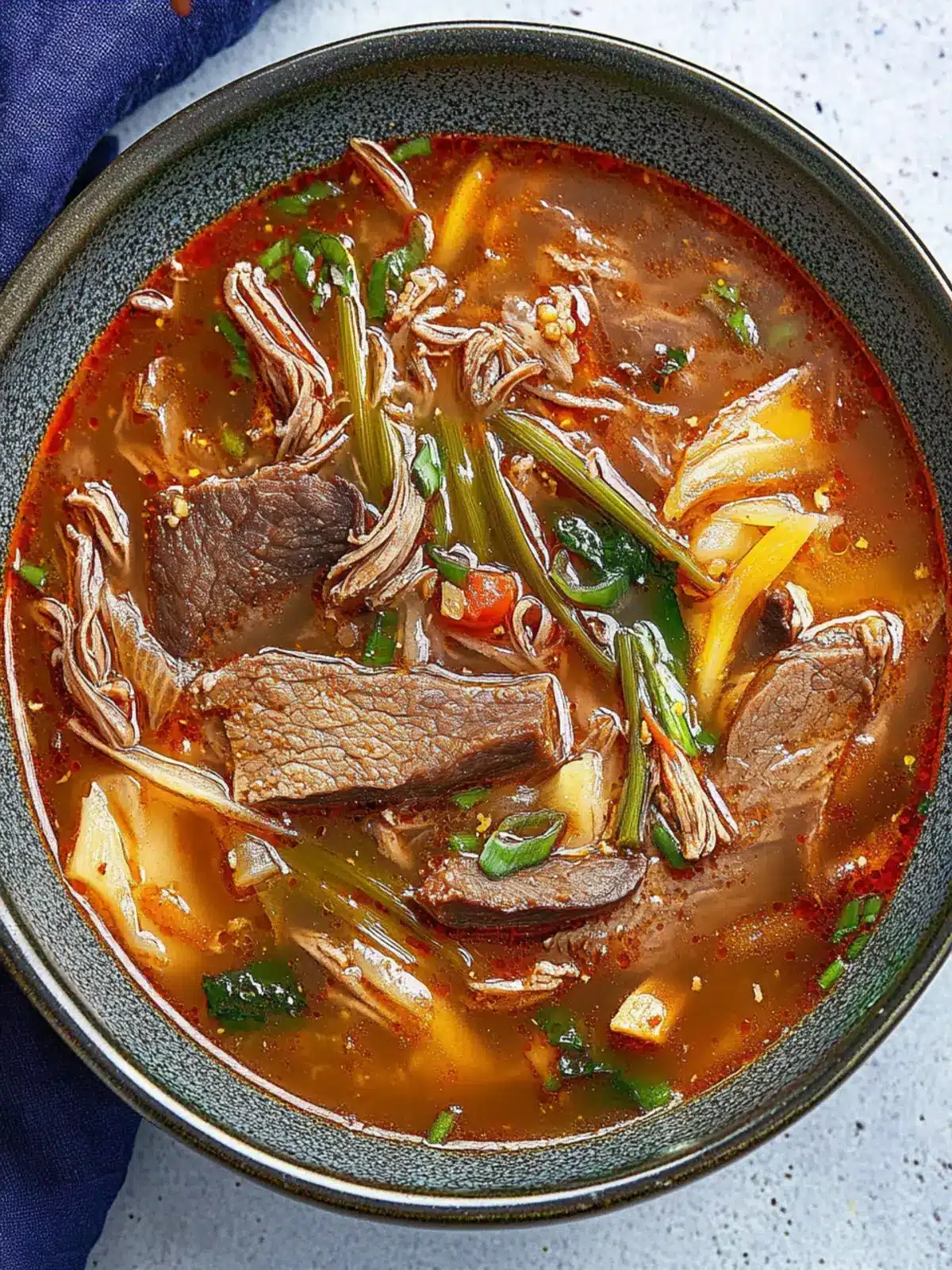
Why is Spicy Korean Beef and Vegetable Soup a must-try?
Hearty, Flavorful Broth: The rich beef broth infused with gochugaru and shiitake mushrooms creates an explosion of flavors that warms your soul.
Easy to Prepare: With just a few simple steps, you can whip up this cozy dish in under two hours, making it perfect for weeknight dinners.
Nutrient-Packed: Filled with protein, fiber, and vitamins from the vegetables, it’s a complete meal that nourishes both body and spirit.
Versatile Options: You can easily customize it swap in your favorite veggies or add noodles for a heartier version.
Crowd-Pleasing Dish: Whether for a family gathering or cozy nights in, this soup is sure to impress and satisfy everyone at the table.
Spicy Korean Beef and Vegetable Soup Ingredients
For the Broth
Beef brisket 1 pound of tender beef that infuses the broth with rich flavors.
Onion 1 medium, quartered to add depth to the broth.
Dried shiitake mushrooms 8 pieces for a delicious earthy flavor that enhances the soup.
For the Vegetables
Garlic 6 cloves, minced to bring a wonderful aroma and zest.
Bean sprouts 1 cup for crispness and a fresh texture.
Fernbrake gosari or bracken fern fiddleheads ¼ cup, pre-soaked and chopped for an authentic touch.
Scallions 1 bunch, chopped to add a mild oniony sweetness.
For the Seasoning
Gochugaru 3 tablespoons of these Korean red pepper flakes to bring heat and color to your soup.
Gochujang 2 tablespoons of Korean red pepper paste for an added depth of spiciness feel free to adjust to taste!
Toasted sesame oil 2 tablespoons to impart a nutty richness.
Soy sauce 2 teaspoons, enhancing the umami flavors.
To Taste
Salt and black pepper A pinch of each to round out the flavor.
Cooked glass noodles (optional) Add for a heartier meal that complements the Spicy Korean Beef and Vegetable Soup beautifully.
How to Make Spicy Korean Beef and Vegetable Soup
Boil the Broth: Heat 3-4 quarts of water to a boil in a large pot over medium-high heat. Add the beef brisket, onion, and shiitake mushrooms. Reduce the heat to low, cover it, and let it simmer for 1 hour, until the beef is tender.
Remove and Skim: Skim off any fat from the top of the broth, then carefully remove the brisket and mushrooms. Set them aside, and discard the onion for a cleaner broth.
Strain the Broth: Strain the broth to get rid of any solids, then return the clear, rich liquid to the pot. This base will be packed with flavor!
Mix the Vegetables: In a large bowl, combine the minced garlic, bean sprouts, pre-soaked fernbrake, and chopped scallions. Stir in the gochugaru, gochujang, sesame oil, soy sauce, and add salt and pepper to taste.
Simmer the Veggies: Stir the vegetable mixture into the pot with the broth, and let it simmer for 15 minutes, allowing those vibrant flavors to meld beautifully.
Slice the Beef: Slice the reserved beef against the grain or shred it if you prefer. Add it back to the pot along with the mushrooms. Let it simmer for an additional 5-10 minutes to warm everything through, adjusting for salt and pepper as needed.
Serve Warm: Serve the Spicy Korean Beef and Vegetable Soup hot in bowls. If you d like, include cooked glass noodles for a delightful twist that takes this dish to the next level.
Optional: Garnish with extra scallions for a fresh crunch!
Exact quantities are listed in the recipe card below.
Make Ahead Options
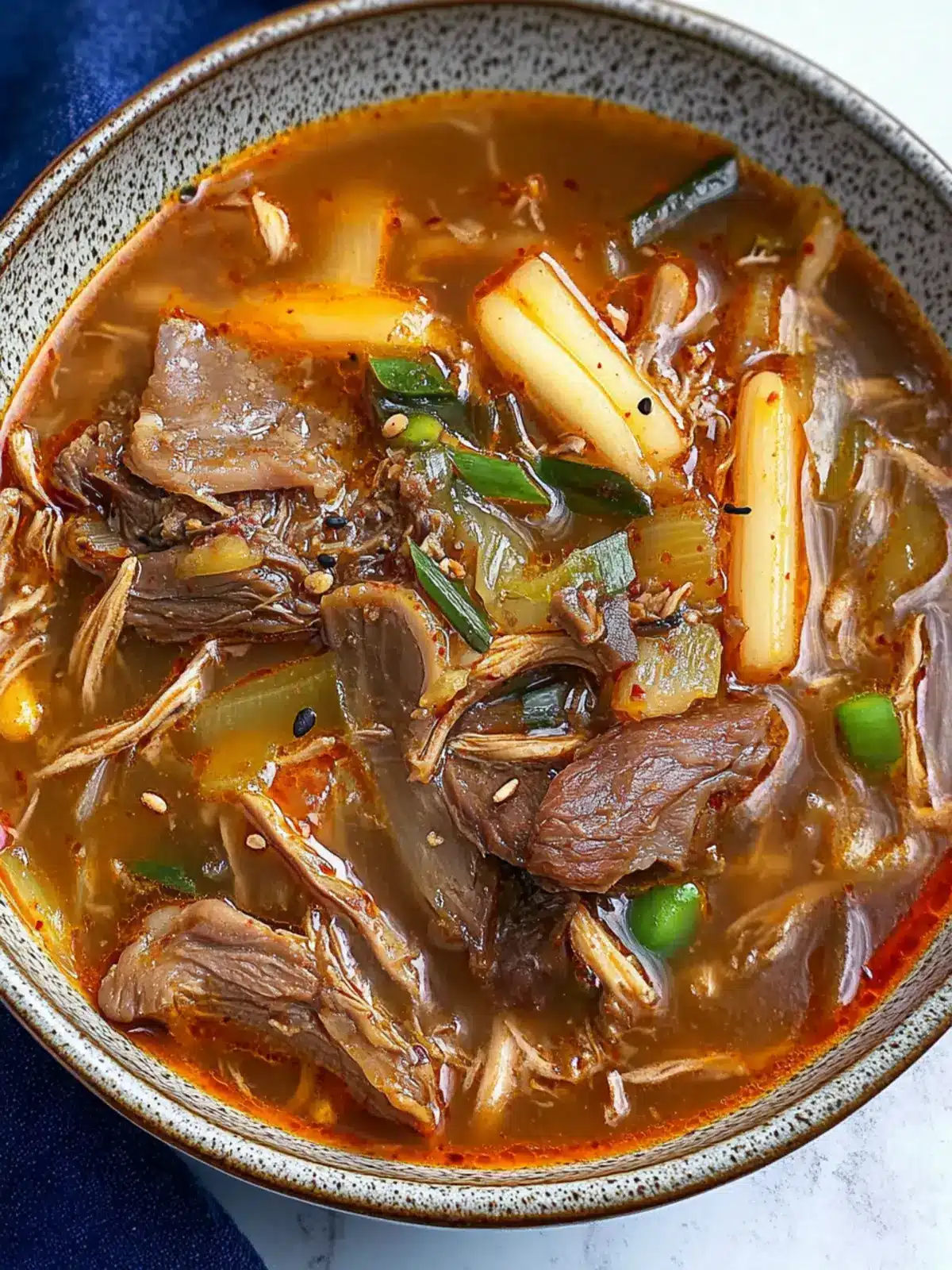
These Spicy Korean Beef and Vegetable Soup preparations are perfect for busy home cooks looking to save time during the week! You can prepare the broth up to 24 hours in advance by simmering the beef, onion, and shiitake mushrooms, then refrigerating the strained liquid. Additionally, chop the garlic, bean sprouts, fernbrake, and scallions, placing them in an airtight container for up to 3 days in the fridge. To maintain quality, keep the broth and veggies separate until you re ready to serve. When you’re set to enjoy your soup, simply reheat the broth, add the vegetable mixture, and simmer for 15 minutes. Finish by slicing the beef and returning it to the pot for a comforting and flavorful meal in no time!
What to Serve with Spicy Korean Beef and Vegetable Soup?
Enjoying a delightful bowl of soup can be a beautiful centerpiece, but let s enhance your meal with the perfect accompaniments!
Steamed Rice: A bowl of fluffy white rice balances the soup s spiciness while soaking up the flavorful broth.
Kimchi: This traditional fermented side adds a tangy crunch that perfectly complements the hearty flavors. Serve alongside for a classic Korean experience!
Garlic Bread: Crispy garlic bread provides a buttery, crunchy contrast that s perfect for dipping into your delicious soup.
Cucumber Salad: A refreshing cucumber salad brings a crisp, cool element that balances the warmth of your Spicy Korean Beef and Vegetable Soup.
Pickled Radish: Sweet and tangy pickled radish offers a delightful crunch and a pop of vibrant flavor, enhancing the overall dining experience.
Light Chardonnay: A chilled glass of Chardonnay enhances the dish s flavors without overpowering. Its crispness will wonderfully contrast the rich broth.
With these sides, you can create a complete meal full of exciting textures and flavors that perfectly accompany your comforting soup. Enjoy your family gathering or cozy night in!
Tips for the Best Spicy Korean Beef and Vegetable Soup
Choose Quality Beef: Opt for well-marbled brisket or chuck, as these cuts become incredibly tender during simmering, enhancing your broth’s richness.
Don’t Rush the Broth: Allow the simmering to work its magic for the full hour. It develops layers of flavor you wouldn t want to miss in your spicy Korean beef and vegetable soup.
Balance the Heat: Adjust the gochugaru and gochujang to your taste preference. Start with less if you’re unsure; you can always add more heat later!
Avoid Overcooking Veggies: Add the garlic and bean sprouts towards the end of cooking to keep their crispness and vibrant color in the broth.
Slice Against the Grain: When slicing your beef, always cut against the grain to ensure tender pieces that are a delight to chew.
How to Store and Freeze Spicy Korean Beef and Vegetable Soup
Fridge: Store leftover Spicy Korean Beef and Vegetable Soup in an airtight container for up to 3 days to maintain its freshness and flavors.
Freezer: For longer storage, freeze the soup in freezer-safe containers for up to 3 months. Ensure to leave space for expansion as it freezes.
Reheating: When ready to enjoy, thaw in the fridge overnight, then reheat on the stove over medium heat until warmed through, adding a splash of water if needed.
Separation Tip: If using glass noodles, store them separately, as they can become mushy in the soup. Add them fresh when reheating to maintain their texture.
Spicy Korean Beef and Vegetable Soup Variations
Feel free to make this dish your own with these delicious twists and substitutions!
Vegetarian: Substitute beef with firm tofu and use vegetable broth for a plant-based delight, keeping the savory profile intact.
Gluten-Free: Use gluten-free soy sauce and be sure your gochujang is certified gluten-free for a tummy-friendly version.
Extra Heat: For spice lovers, add sliced fresh chilies or a dash of chili oil in addition to gochugaru for an extra kick.
Creamy Texture: Stir in a splash of coconut milk or finish with a dollop of sour cream for a luscious and creamy take on the soup.
Noodles Galore: Experiment with different noodles like udon, soba, or even rice noodles for a new texture and pairing.
Herbed Twist: Add a handful of fresh cilantro or basil at the end for a bright, aromatic finish that elevates the flavors beautifully.
Load Up on Veggies: Toss in additional vegetables like bok choy, carrots, or zucchini for more nutrition and a colorful presentation.
Savory Umami: Enhance depth by incorporating a tablespoon of miso paste into the broth before simmering; it adds a wonderful umami punch.
Spicy Korean Beef and Vegetable Soup Recipe FAQs
How do I select the best beef for my soup?
Absolutely! When choosing beef for your spicy Korean beef and vegetable soup, opt for well-marbled cuts like brisket, chuck, or short ribs. These cuts become tender and flavorful during the simmering process, enhancing the overall richness of the broth. Look for bright red meat with a good amount of fat interspersed to ensure that melt-in-your-mouth texture!
How should I store leftover soup?
I recommend storing any leftover spicy Korean beef and vegetable soup in an airtight container in the refrigerator. It will stay fresh for up to 3 days. Make sure to let it cool completely before sealing, as this helps preserve its flavors. If you want to enjoy it later, consider freezing it!
Can I freeze my soup, and if so, how?
Very! You can freeze your spicy Korean beef and vegetable soup for up to 3 months. To do this, ladle the cooled soup into freezer-safe containers, leaving some space at the top for expansion. Once frozen, simply thaw in the refrigerator overnight before reheating it gently on the stove. If you find the broth has thickened, add a splash of water to get it back to that perfect consistency.
What if my soup turns out too spicy?
No worries! If you find your soup is a bit too spicy, you can balance the heat by adding a little coconut milk or cream for a creamy texture and flavor. Alternatively, consider incorporating more broth or even some cooked rice or glass noodles to dilute the heat while maintaining a hearty dish.
Are there any dietary considerations for this recipe?
Certainly! This spicy Korean beef and vegetable soup is generally gluten-free if you use gluten-free soy sauce. However, always check your labels to be sure. If you’re preparing this dish for someone with allergies, be cautious of the ingredients like sesame oil and make adjustments as needed. For a vegan or vegetarian version, replace the beef with tofu and use vegetable broth as a base. The flavors will still shine through beautifully!
Can I add more vegetables to this soup?
Absolutely! The more, the merrier! You can easily customize this soup by adding vegetables like carrots, zucchini, or mushrooms. Just remember to add heartier vegetables earlier and more delicate ones, like spinach or bok choy, towards the end of cooking to keep them vibrant and fresh.